Introduction
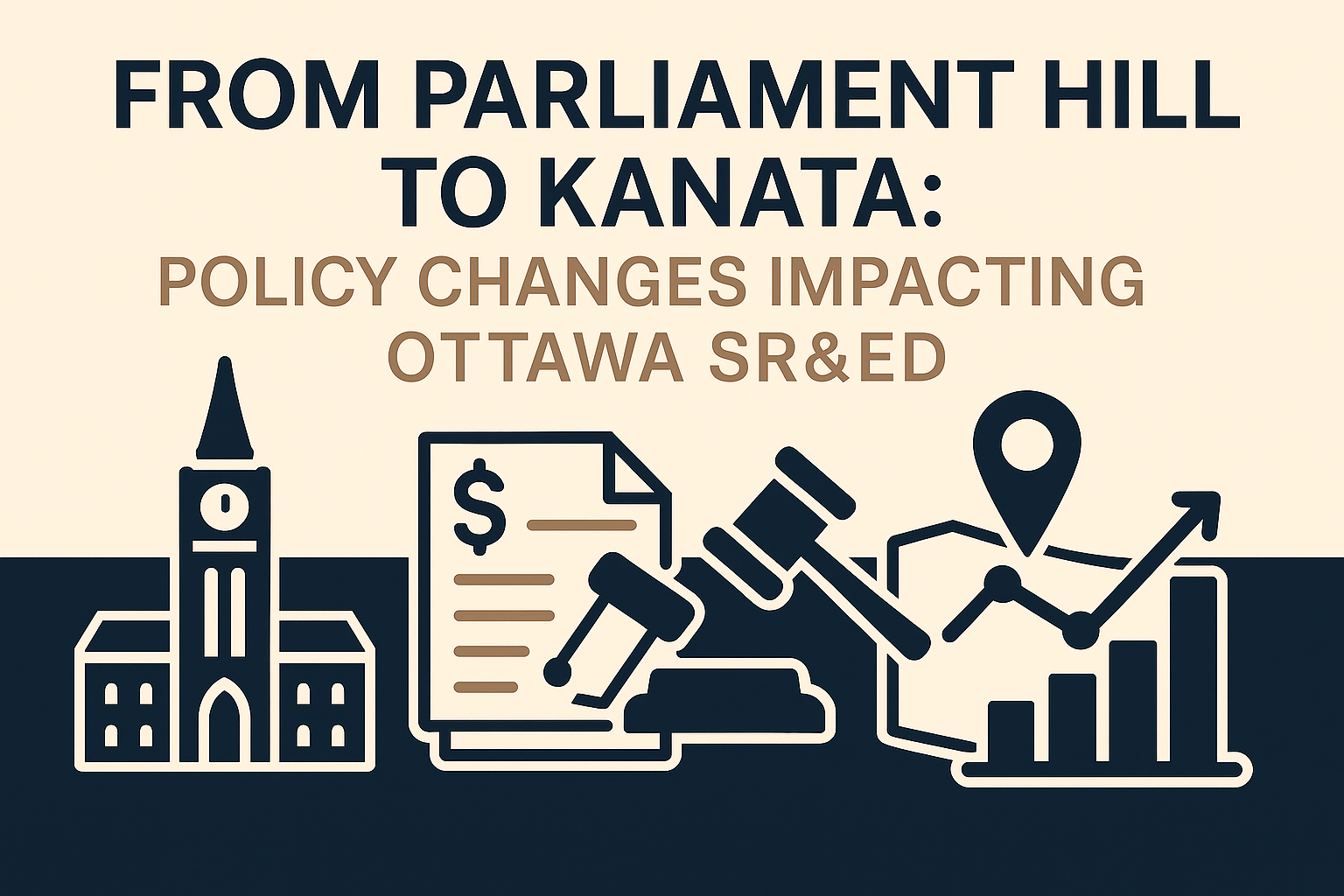
Ottawa, home to Parliament Hill and the heart of Canada’s federal decision-making, has always been a central hub for shaping innovation policy. Just down the road, Kanata North stands as one of the largest technology parks in the country, housing hundreds of companies driving advancements in software, clean technology, defense, and telecommunications. The intersection of government policy and private-sector innovation has never been more critical than it is today, particularly in the context of Scientific Research and Experimental Development (SR&ED).
Recent changes in SR&ED legislation and administration are reshaping how Ottawa’s tech firms, manufacturers, and startups access this crucial tax credit. Understanding the policy shifts and their implications is vital for businesses looking to maximize their refunds and stay competitive in a fast-evolving innovation economy.
The Federal SR&ED Program and Ottawa’s R&D Ecosystem
The SR&ED program remains Canada’s single largest source of R&D funding, distributing billions of dollars in tax incentives annually. For Ottawa companies, particularly in Kanata’s technology hub, these incentives often bridge the gap between concept and commercialization.
Ottawa’s R&D ecosystem thrives because of the synergy between federal institutions, research universities, and private enterprises. The policies debated and enacted on Parliament Hill directly influence whether businesses in Kanata North can scale, attract global investment, or falter under administrative burdens.
For a deeper understanding of eligibility, businesses often turn to resources like the SR&ED eligibility guide, which outlines the criteria companies must meet to qualify for tax credits.
Key Policy Changes Affecting Ottawa Businesses
1. Enhanced Scrutiny on Documentation
The CRA has intensified its focus on the quality of documentation accompanying claims. While SR&ED credits are still available to a wide range of industries, the threshold for proving scientific or technological uncertainty has been raised. Companies must now demonstrate systematic experimentation in greater detail, often requiring sophisticated project tracking and recordkeeping tools.
This heightened requirement has put pressure on SMEs in Kanata who lack dedicated compliance teams. Fortunately, solutions exist, such as leveraging consultants and using advanced SR&ED calculators to better estimate and justify eligible expenses.
2. Tighter Timelines for Claims
Policy shifts have shortened the filing windows for certain categories of claimants. Previously, companies could backdate SR&ED claims with relative ease. Now, strict deadlines mean Ottawa firms need to prioritize timely filing or risk losing significant refunds. Businesses exploring strategies like back-dating SR&ED claims must navigate these tighter rules carefully.
3. Adjustments to Eligible Expenditures
The government has also refined what qualifies as an eligible SR&ED expense. Salaries remain a core category, but certain overhead and contractor costs face greater restrictions. This impacts many Ottawa software and clean-tech startups who rely on third-party partnerships. A breakdown of what counts and what doesn’t is available through specialized resources on eligible SR&ED expenses.
4. Increased Coordination Between Federal and Provincial Programs
Policy reforms now place greater emphasis on coordinating federal and provincial incentives. For Ontario-based businesses, this means aligning federal SR&ED filings with provincial R&D credits for maximum efficiency. Companies in Kanata North need to plan strategically to leverage both streams, ensuring they do not leave funding on the table.
External resources, such as the Government of Canada’s official SR&ED portal, provide direct guidance on these changes.
5. Focus on Strategic Sectors: CleanTech and AI
Recent policy updates have introduced targeted emphasis on clean technology, artificial intelligence, and biotech. Ottawa, with its growing clean-tech ecosystem and concentration of AI startups, stands to benefit—if companies can align projects to the government’s innovation priorities. Businesses exploring whether their sustainability projects qualify can reference specialized guides such as clean technology innovations and SR&ED.
Impacts on Kanata North’s Innovation Hub
Kanata North is home to over 540 companies employing more than 33,000 people, making it Canada’s largest technology park. Policy changes in SR&ED have ripple effects across this cluster:
- Startups face higher entry barriers due to increased compliance requirements.
- Scale-ups must reallocate resources toward documentation, potentially slowing growth.
- Global players like Ericsson and Nokia adapt more smoothly due to established compliance infrastructure, creating uneven competition.
Local case studies, such as those outlined in Ottawa SR&ED Kanata North projects, highlight how businesses are adapting strategies to navigate shifting policy landscapes.

Financing SR&ED Refunds in a Stricter Policy Environment
One of the greatest challenges Ottawa companies face is cash-flow timing. Even with a successful claim, waiting months for refunds can strain finances. Policy changes have not shortened refund timelines, making SR&ED financing an attractive solution.
Organizations can explore SR&ED financing options to access capital before refunds arrive. This is particularly useful for Kanata startups where payroll and R&D expenses are constant pressures.
The Role of SR&ED Consultants in Navigating Policy Changes
Consultants play a vital role in helping Ottawa businesses adapt to shifting policies. Their expertise ensures claims align with new CRA standards, reducing rejection risk and maximizing refunds.
The value of hiring an SR&ED consultant becomes clear when navigating audits, complex documentation, or sector-specific eligibility questions. This guidance is especially critical for companies balancing innovation with limited administrative resources.
External Guidance and Compliance Resources
To stay compliant and competitive, Ottawa businesses should integrate insights from both internal planning and external resources. Reliable references include:
- Canada Revenue Agency SR&ED overview – official federal guidance.
- Innovation, Science and Economic Development Canada – resources on federal priorities in clean technology and AI.
By combining government resources with specialized consulting, firms in Kanata can better anticipate and adapt to upcoming policy adjustments.
Looking Ahead: Ottawa’s SR&ED Policy Landscape
From Parliament Hill’s legislative halls to Kanata’s corporate boardrooms, SR&ED policy is reshaping the future of Ottawa’s innovation economy. Businesses that adapt early to documentation requirements, tighter timelines, and sector-focused incentives will remain ahead of the curve.
For companies unsure of their current strategy, engaging with resources like the step-by-step SR&ED claim guide can provide clarity on compliance while positioning for maximum returns.
Conclusion: Positioning Ottawa Firms for Success
Ottawa’s unique position as both a political capital and an innovation hub creates unmatched opportunities for businesses leveraging SR&ED. Policy changes may increase complexity, but they also present new pathways for growth, particularly in clean technology and AI.
Companies that integrate proactive planning, expert consulting, and financing strategies will thrive despite the heightened scrutiny. The Ottawa ecosystem—from Parliament Hill to Kanata—remains a global example of how government policy and private-sector innovation can work hand in hand to fuel economic development.
For tailored guidance and to maximize returns under the new policy landscape, businesses should contact SR&ED Plus Fundamentals.