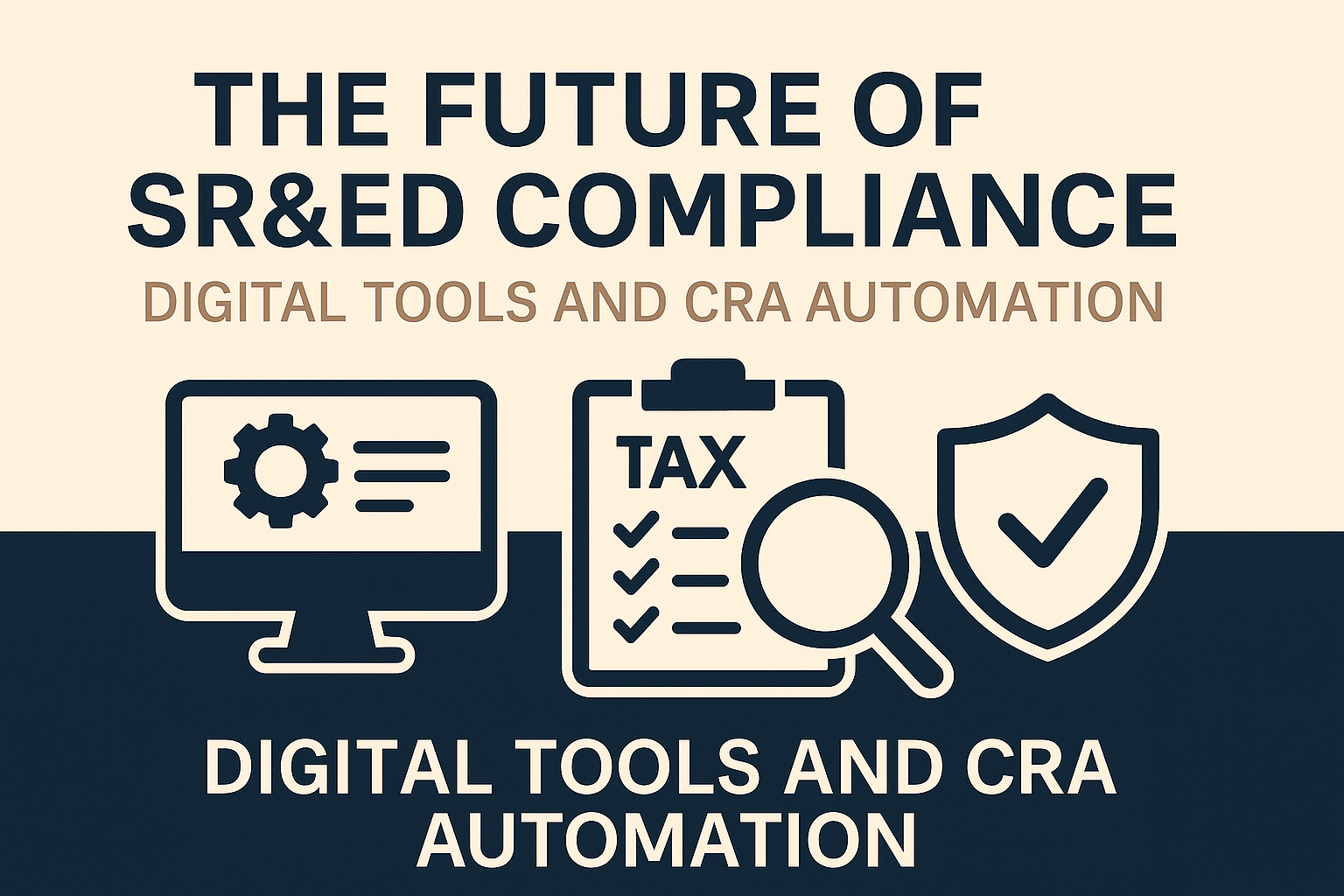
The Scientific Research and Experimental Development (SR&ED) program remains one of Canada’s most powerful innovation incentives, but compliance requirements are growing increasingly complex. As the Canada Revenue Agency (CRA) invests heavily in automation and digital oversight, businesses must adapt their recordkeeping, claim preparation, and reporting strategies to stay compliant. The future of SR&ED compliance will be defined by digital transformation—where the right tools and strategies can mean the difference between seamless claims and costly audits.
The Evolution of SR&ED Compliance
From Paperwork to Digital Oversight
For decades, SR&ED compliance revolved around manual paperwork and traditional reporting. Businesses had to track eligible expenditures, maintain time logs, and provide detailed technical narratives—all managed with spreadsheets and binders. Today, the CRA is digitizing its oversight with advanced review systems, automated audit triggers, and electronic claim submissions. This shift means compliance now depends on how well companies integrate digital tools into their R&D workflows.
CRA’s Move Toward Automation
The CRA has begun leveraging machine learning to identify red flags in SR&ED claims. Submissions with inconsistent records, vague project descriptions, or misaligned expenditures are more likely to be flagged for review. Businesses that rely on outdated methods risk being caught in time-consuming audits. To succeed in this new environment, organizations must embrace automation-friendly recordkeeping.
Why Digital Tools Are Now Essential
Streamlining Documentation
Accurate documentation is at the core of SR&ED eligibility. Digital platforms allow real-time tracking of R&D activities, simplifying the process of recording scientific and technological uncertainty. Instead of relying on employee memory at year-end, automated systems capture time logs, experimental results, and expenditures as they occur.
For example, companies that adopt specialized SR&ED software benefit from structured templates aligned with CRA compliance expectations. This reduces the likelihood of errors while ensuring claims meet eligibility standards as outlined in resources like SR&ED eligibility.
Improving Accuracy with AI Integration
AI-powered platforms can automatically categorize expenses, flagging eligible versus ineligible costs. These systems integrate with financial tools, ensuring that SR&ED tax credits are maximized without triggering compliance concerns. By cross-referencing project logs with accounting data, businesses create a transparent audit trail.
Key Features of Modern SR&ED Compliance Tools
1. Automated Time Tracking
Time allocation remains one of the most scrutinized aspects of SR&ED claims. Automated time-tracking tools assign employee hours directly to eligible projects. This not only prevents misreporting but also strengthens the claim’s defense during a CRA audit.
2. Real-Time Expenditure Monitoring
Linking SR&ED tools to enterprise resource planning (ERP) systems ensures expenses are categorized correctly. From salaries to subcontractor costs, digital monitoring prevents the accidental inclusion of ineligible expenses. This integration is particularly valuable when businesses are calculating expected credits using tools like the SR&ED calculator.
3. Cloud-Based Project Recordkeeping
Cloud solutions enable centralized storage of experiments, prototypes, and technical documents. This provides teams with access to historical R&D data while ensuring nothing is lost during staff turnover or system migration. Moreover, CRA auditors increasingly expect digital records to be easily retrievable.
4. Compliance Dashboards
Dashboards give executives real-time visibility into SR&ED claims, tracking project progress, eligible expenses, and refund estimates. This data-driven approach supports better financial planning and aligns with advanced strategies like SR&ED financing.

The CRA’s Digital Future: What to Expect
AI-Driven Claim Reviews
As CRA automates claim reviews, we can expect machine learning to detect inconsistencies in narrative descriptions and expenditures. Businesses must ensure their documentation is precise, detailed, and consistent across all records.
Automated Audit Triggers
Red flags will increasingly be raised by algorithms rather than manual checks. This means compliance software that integrates financial, technical, and time-tracking data will be critical for minimizing audit risk.
Faster Refund Timelines
The digitization of SR&ED claims may lead to faster processing times, especially for companies that provide clean, consistent, and verifiable digital submissions. However, companies that fail to align with automation-friendly practices may face delays and rejections.
For guidance on adapting to CRA changes, businesses should review insights such as how CRA policy changes in 2025 affect SR&ED strategy.
How Businesses Can Prepare for Compliance Automation
Adopt a Proactive Compliance Culture
Instead of preparing SR&ED claims at year-end, forward-thinking companies integrate compliance into daily operations. This approach reduces risk and ensures ongoing readiness for CRA audits.
Invest in Digital Training
Teams need to understand how to use new compliance tools effectively. Training sessions on time-tracking software, documentation protocols, and digital audit preparation ensure consistent adoption across departments.
Partner with Specialized Consultants
Even with digital tools, businesses benefit from expert guidance. Experienced SR&ED consultants help integrate tools into compliance strategies, identify gaps, and provide defense during audits.
The Role of Automation in Audit Defense
Building a Strong Digital Paper Trail
Audit defense will increasingly depend on the ability to demonstrate digital transparency. Businesses with structured project logs, synchronized expense reports, and automated time entries will be far better positioned than those relying on manual notes.
Reducing Administrative Burden
Automation minimizes the workload of finance and R&D teams, freeing them to focus on innovation. By ensuring compliance in the background, digital tools reduce stress during audits and strengthen the credibility of claims.
Enhanced CRA Communication
Some platforms even allow direct integration with CRA electronic submission systems. This reduces manual entry errors and ensures consistent communication throughout the claim review process.
Strategic Benefits of Digital SR&ED Compliance
Improved Cash Flow
By automating compliance, businesses shorten claim processing timelines and increase confidence in refund eligibility. This improves liquidity and helps fund ongoing innovation.
Stronger Risk Management
Digital systems flag potential compliance issues early, allowing corrective action before CRA intervention. This reduces the risk of claim rejections or penalties.
Future-Ready Innovation Funding
Companies embracing automation today are positioning themselves to adapt quickly as CRA systems become more sophisticated. This future-proofing ensures long-term access to R&D incentives.
For businesses seeking financing options during refund delays, resources such as SR&ED financing provide additional strategies.
External Influences on Digital SR&ED Compliance
The push for automation in SR&ED compliance is not unique to Canada. Globally, tax authorities are adopting digital-first approaches to monitoring R&D incentives. Businesses can learn from international practices and ensure compliance aligns with evolving global standards.
For instance, the Government of Canada’s official SR&ED program outlines ongoing modernization efforts, while international comparisons highlight how Canada remains competitive in funding innovation.
Conclusion: Positioning for Success in the Digital SR&ED Era
The future of SR&ED compliance lies at the intersection of digital tools and CRA automation. Businesses that embrace technology, implement structured recordkeeping, and align with CRA’s evolving expectations will not only reduce audit risks but also unlock maximum R&D funding. Those who fail to adapt risk falling behind, both in compliance and in innovation.
For organizations ready to future-proof their compliance strategy, professional guidance and digital adoption are no longer optional—they are essential for survival in a digital-first SR&ED landscape.