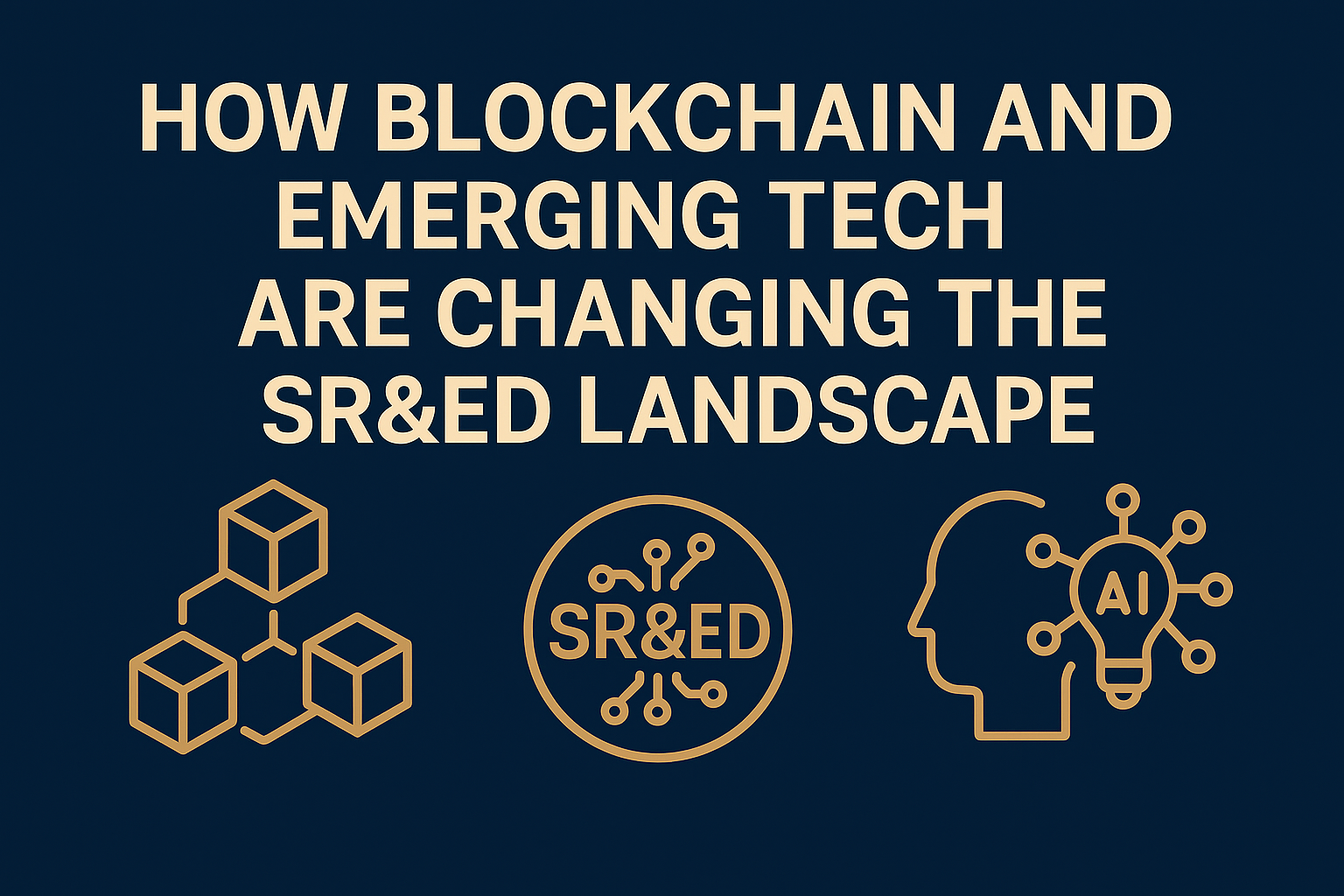
The Canadian Scientific Research and Experimental Development (SR&ED) program has long been one of the most powerful innovation incentives available to businesses. It allows organizations to recover a significant portion of their R&D expenses through tax credits, fueling innovation across industries. But as the global technology landscape evolves, blockchain, artificial intelligence (AI), and other emerging technologies are reshaping how businesses conduct R&D and, by extension, how they engage with SR&ED.
This article explores in detail how blockchain and emerging technologies are transforming SR&ED claims, compliance, documentation, and financing. We’ll examine both the opportunities and risks, as well as actionable insights for Canadian businesses looking to maximize their credits while staying ahead of regulatory and technological change.
Blockchain’s Impact on SR&ED Documentation and Compliance
Immutable Records for Audit Defense
One of the most difficult aspects of the SR&ED program is proving technological uncertainty and systematic investigation. CRA audits often focus on the integrity of documentation. Blockchain provides a transparent, tamper-proof way to timestamp and store R&D records. This ensures businesses can prove exactly when work was conducted, which is particularly useful when the CRA questions timelines.
For companies that have faced SR&ED audit challenges, integrating blockchain can strengthen compliance. If you’re preparing for a review, learning more about what to expect in an SR&ED CRA audit is crucial, and blockchain technology could be part of your defense strategy.
Smart Contracts for Eligibility Tracking
Blockchain-based smart contracts can automatically flag eligible expenses as they occur. For instance, when a company purchases cloud computing resources for an AI project, the expense could be tagged in real time as potentially SR&ED-eligible. This ensures no costs slip through the cracks and improves accuracy when completing a step-by-step SR&ED claim process.
Artificial Intelligence and Automation in SR&ED Claims
AI-Driven Eligibility Assessments
AI can analyze technical project descriptions and identify whether they meet the criteria for SR&ED eligibility. This reduces the ambiguity around claims and lowers the chances of rejection. For companies exploring whether their projects qualify, our SR&ED eligibility guide outlines the core criteria that AI-driven tools can streamline.
Natural Language Processing for Documentation
Emerging AI tools can auto-generate draft narratives for SR&ED claims based on raw R&D logs, Slack discussions, and Jira tickets. This helps companies overcome one of the largest hurdles: creating strong, CRA-ready technical narratives.
Predictive Analytics for Risk Management
AI can forecast the probability of an SR&ED claim being audited, enabling companies to strengthen documentation proactively. This is particularly valuable in high-risk industries such as software development or clean technology, where the CRA often applies additional scrutiny.

Fintech Innovations in SR&ED Financing
Tokenization of SR&ED Refunds
Traditionally, businesses wait months for CRA to process SR&ED refunds. With blockchain, refunds can be tokenized as digital assets, allowing companies to sell or leverage them instantly for liquidity. This creates a new financial instrument for startups that need immediate cash to scale.
For businesses looking for faster access to funds, options like SR&ED financing are already available. Emerging fintech models powered by blockchain will only expand this opportunity.
DeFi and SR&ED-Backed Lending
Decentralized Finance (DeFi) platforms could allow businesses to borrow against their SR&ED tax credits using blockchain-based lending protocols. This globalizes access to capital, reducing dependence on traditional lenders.
Cybersecurity and Privacy Considerations
While blockchain enhances transparency, it also raises questions around data privacy. Sensitive R&D data must be carefully managed to avoid breaching confidentiality agreements or exposing proprietary research.
Canadian businesses must also ensure compliance with federal and provincial privacy regulations. For further context, government resources like Innovation, Science and Economic Development Canada (ISED) provide guidelines on secure data use in R&D.
How Blockchain and AI Improve CRA Relations
Enhanced Transparency for CRA Auditors
If CRA auditors can access blockchain-stamped R&D records, reviews will become more efficient. This mutual transparency reduces disputes and accelerates refund timelines.
Reducing Errors and Rejections
By automating recordkeeping and applying AI-driven eligibility checks, companies can dramatically reduce the common mistakes in SR&ED claims. Businesses can review best practices in our resource on common SR&ED claim mistakes to avoid costly errors.
Sector-Specific Impacts of Emerging Tech on SR&ED
Software and IT Projects
AI and blockchain tools are particularly powerful in software development, where version control systems and GitHub commits can be automatically recorded on blockchain for SR&ED compliance. Companies working in this sector should explore resources like SR&ED for software and IT projects.
Manufacturing and Clean Tech
In industries where IoT and robotics are integrated, blockchain can record machine data in real time to verify experimental development. Clean technology projects, already a priority for government funding, can combine sustainability goals with enhanced SR&ED tracking.
Future Outlook: Blockchain, AI, and SR&ED Convergence
As Canada continues to prioritize R&D through SR&ED, the integration of blockchain and AI will redefine the program. Companies that adopt these tools early will have an edge in compliance, efficiency, and financing.
The future of SR&ED in Canada’s innovation strategy will not just depend on policy updates but also on how effectively businesses embrace emerging technologies to maximize their claims.
Conclusion
The intersection of blockchain, AI, and fintech is reshaping how Canadian companies approach SR&ED. From immutable audit records and automated eligibility assessments to tokenized refunds and predictive audit risk analysis, businesses that leverage these technologies can secure greater financial stability and innovation funding.
To prepare, companies should:
- Invest in blockchain-based documentation.
- Adopt AI-driven claim preparation tools.
- Explore fintech financing models for liquidity.
- Stay informed on CRA policy changes regarding technology use.
If your business is exploring how to maximize the benefits of SR&ED in a rapidly changing tech landscape, connect with experienced advisors who can guide you through the transition. Contact us today to secure your innovation funding future.