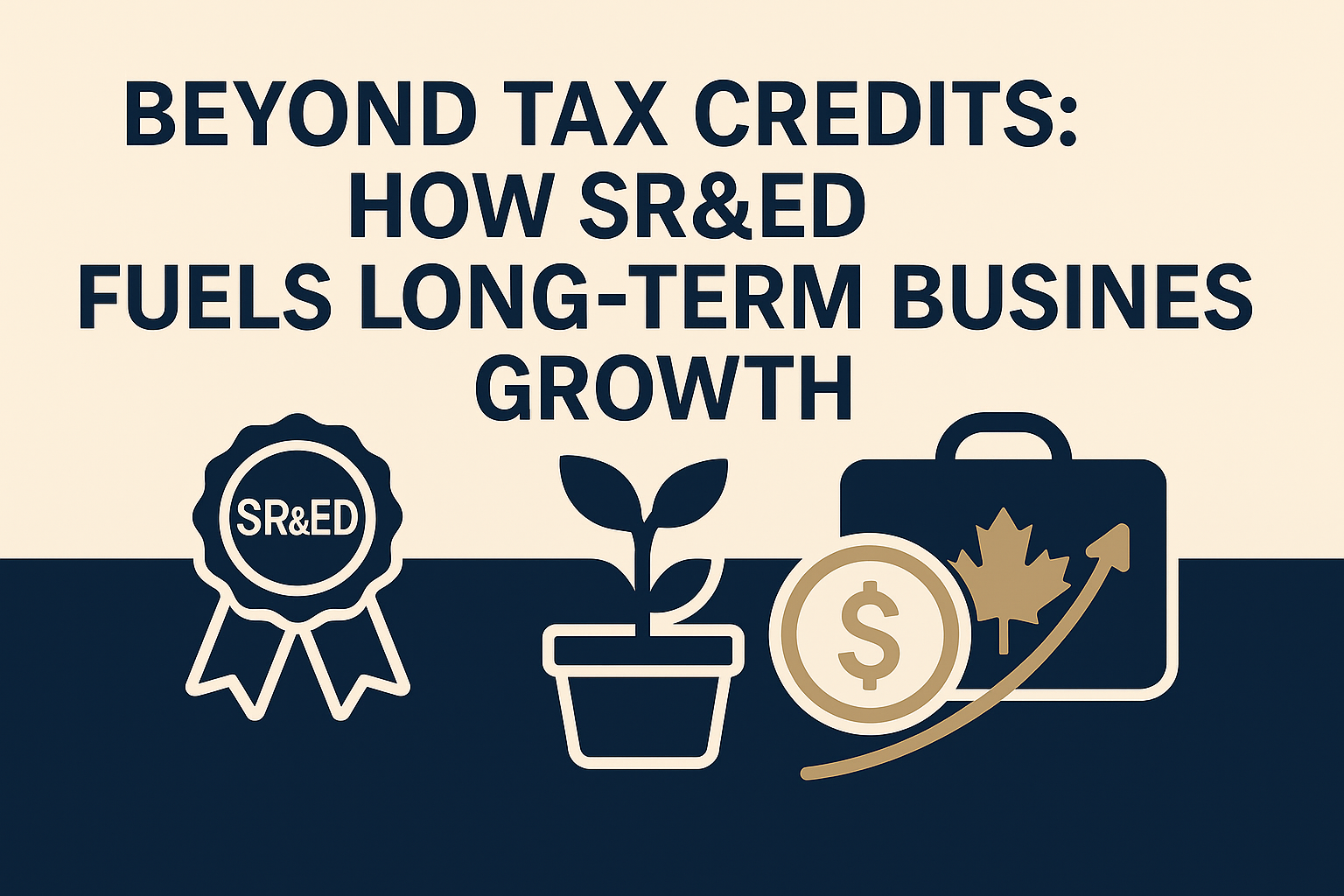
When Canadian companies think about the Scientific Research & Experimental Development (SR&ED) program, the first thought is usually the immediate benefit of tax credits and refunds. While these financial incentives are powerful, the true value of SR&ED goes far beyond short-term refunds. Properly leveraged, SR&ED can become a strategic engine for innovation, competitiveness, and sustained business growth.
This article explores how organizations can maximize SR&ED to strengthen their R&D pipeline, secure financing, and create lasting market advantages.
Understanding SR&ED Beyond Refunds
The SR&ED program in Canada is widely known for offering businesses refundable and non-refundable tax credits for eligible research and development activities. However, this framework also pushes organizations to adopt a structured, long-term approach to innovation.
- Encourages detailed project documentation that improves internal knowledge transfer.
- Strengthens a company’s financial planning by offsetting high R&D costs.
- Opens doors to SR&ED financing that provides cash flow before CRA refunds arrive.
For businesses new to the program, reviewing SR&ED eligibility criteria is the first step to understanding how to qualify and build a growth-oriented strategy.
The Strategic Role of SR&ED in Business Growth
1. Driving Continuous Innovation
Unlike one-off grants, SR&ED is structured for ongoing claims. Companies can submit annually, which incentivizes consistent investment in R&D. This approach builds a culture of experimentation and innovation that compounds over time.
2. Enhancing Business Valuation
Innovation-driven companies generally command higher valuations. By demonstrating a proven track record of SR&ED-backed projects, businesses can show potential investors and buyers that they have:
- A strong pipeline of intellectual property
- Reliable government-backed funding
- Reduced operational risks in innovation-heavy industries
This is particularly important when positioning a company for mergers or acquisitions, where SR&ED tax credits can directly boost business valuation.
3. Strengthening Cash Flow
For many startups and SMEs, cash flow is the number one barrier to sustained R&D. Programs such as SR&ED financing allow businesses to access funds before CRA refunds are issued, keeping operations stable and innovation active year-round.

SR&ED as a Long-Term Growth Engine
Building a Sustainable R&D Budget
Incorporating SR&ED into strategic financial planning transforms it from a tax incentive into a growth mechanism. By aligning SR&ED credits with annual R&D budgets, businesses can expand their innovation portfolio without overextending financially.
For guidance, many organizations rely on expert SR&ED consultants to help integrate tax credits into their long-term innovation roadmap.
Boosting Competitiveness in Global Markets
With global competition intensifying, Canadian companies need every advantage to remain relevant. SR&ED not only helps reduce development costs but also accelerates time-to-market, enabling businesses to innovate faster and stay ahead of international competitors.
Mitigating Risk in Innovation
R&D comes with inherent risks—technical failure, market rejection, or regulatory hurdles. SR&ED reduces financial exposure, making it easier for companies to take calculated risks that can lead to breakthrough innovations.
SR&ED in Action: Industry Examples
Technology & Software Development
Software firms leverage SR&ED to offset the costs of experimental coding, algorithm development, and emerging technologies like AI and machine learning. Many rely on specialized tools such as the SR&ED Calculator to accurately estimate potential claims.
Manufacturing & Industrial R&D
Manufacturers benefit from SR&ED by experimenting with new processes, sustainable materials, or automation. These innovations improve efficiency, reduce waste, and support Canada’s push toward greener technologies.
Startups & High-Growth SMEs
For early-stage companies, SR&ED can be the difference between scaling quickly or stagnating. Many startups use SR&ED credits to reinvest directly into additional R&D or to attract new venture capital.
Maximizing Long-Term ROI with SR&ED
To ensure SR&ED delivers more than refunds, businesses must integrate it into a strategic growth framework. Key practices include:
- Comprehensive Documentation
Keeping detailed records of experiments and technical uncertainties ensures stronger claims and a culture of knowledge retention. - Strategic Claiming
Filing consistently, year after year, creates predictable funding streams. Companies that file sporadically often miss out on compounding growth opportunities. - Expert Guidance
Partnering with a trusted advisor can uncover overlooked expenses, streamline claims, and align SR&ED strategy with corporate objectives.
For more details on practical application, review Canada’s official Government of Canada SR&ED guidelines or industry-driven insights from Innovation, Science and Economic Development Canada.
Conclusion
SR&ED is far more than a tax credit—it is a strategic lever for growth. When properly integrated into a business model, it enhances cash flow, valuation, innovation, and competitiveness. Companies that treat SR&ED as a long-term business tool rather than a short-term refund strategy consistently outperform their peers.
To explore how SR&ED can align with your company’s growth strategy, visit our Contact page and connect with experts who can guide you through building a sustainable, innovation-driven future.